
Portsmouth homeowners guide
The short answer
For most Portsmouth homes, the most useful annual window for gutter cleaning is late October or early November, after the main leaf fall. A second check in April helps clear winter silt, blossom and moss. Homes beneath mature trees, on exposed Southsea elevations or with awkward parapet and valley drainage may need an additional visit.
The aim is simple: keep the route to the downpipe clear before autumn rain turns a layer of leaves and silt into an overflow. If water is already spilling over the front edge, a downpipe is gurgling or the fascia is showing fresh streaking, arrange a clearance sooner rather than waiting for the calendar.
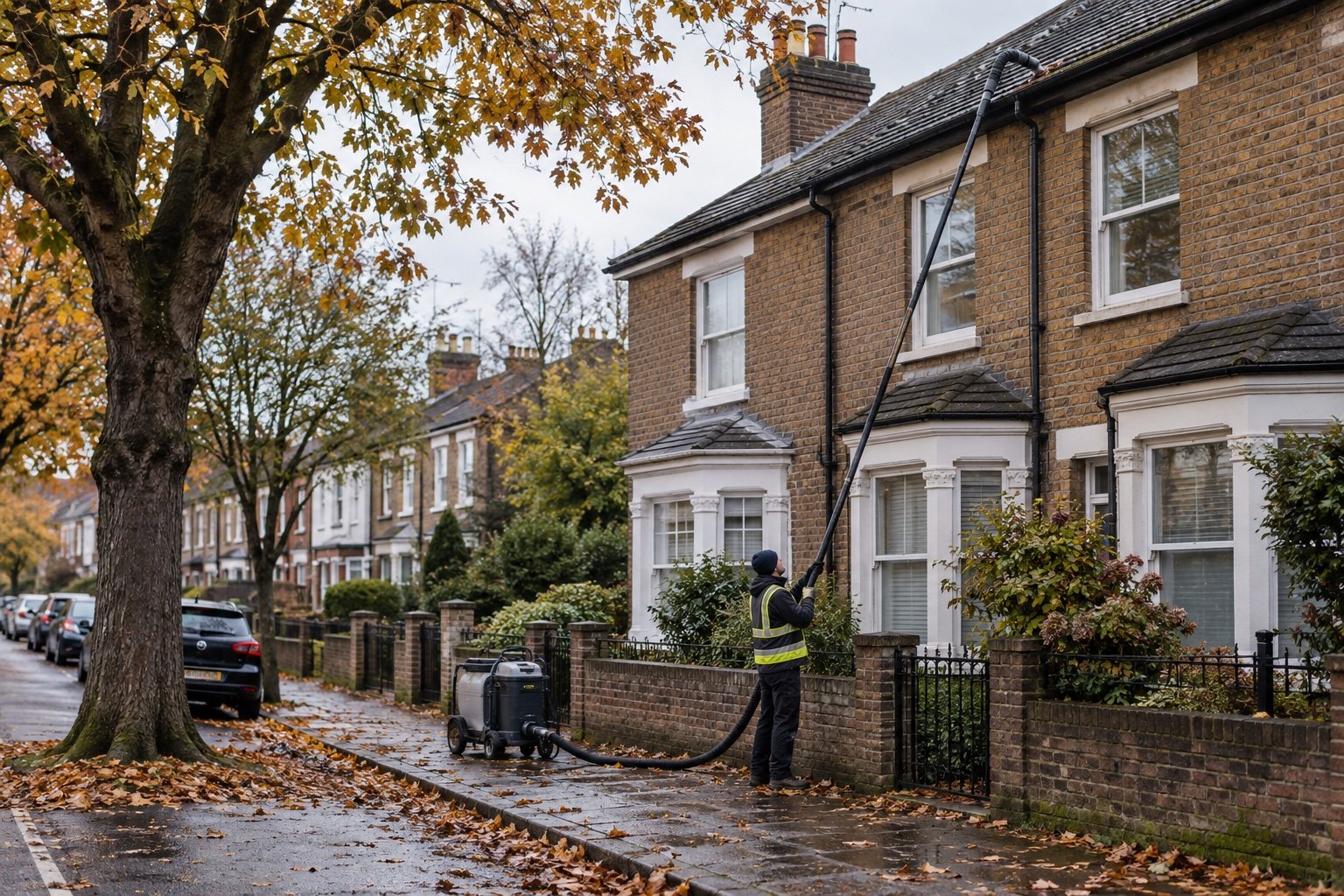
The Portsmouth gutter cleaning calendar
Spring is a useful time to remove residue left by winter weather and flowering trees. Summer is often a watch-and-check period, although shaded runs can collect moss and fine debris. Autumn is the critical clearance season: book after the main leaf fall rather than on the first dry day in September while the canopy is still holding leaves. Winter work is usually reactive unless conditions are suitable.
- March to May: check winter silt, blossom, moss on shaded runs and restricted outlets.
- June to August: inspect for moss, lichen, tile grit and early debris around guards.
- September to November: give the highest priority to leaf mats, seed debris and the first heavy rain.
- December to February: respond to overflow, storm debris or detached sections when safe access is available.
Timing is more useful than a blanket instruction to clean twice a year. A sheltered side street in Copnor can have a different debris pattern from an open Southsea elevation only a short distance away.
How often do different Portsmouth homes need clearance?
A Victorian terrace may have a hopper head, parapet gutter or valley that collects debris differently from a standard eaves run. A typical semi may use a common half-round gutter and round downpipe, while a larger roof area may need a deeper-flow profile. Frequency follows the drainage layout, roof area and nearby canopy—not simply whether the property is a terrace or a semi.
- Tree-lined terraces in Southsea and Fratton often need two visits and sometimes a third check during heavy leaf fall.
- Open, high-ridge homes in Paulsgrove or Farlington may need one planned annual clean, followed by a review.
- Old Portsmouth and seafront elevations benefit from planned checks because wind-driven debris and coastal exposure can reveal problems sooner.
- Blocks and commercial buildings need a schedule based on drainage layout, access and management arrangements.
Signs your gutters need cleaning now
Use these as ground-level observations. Do not climb to confirm a diagnosis.
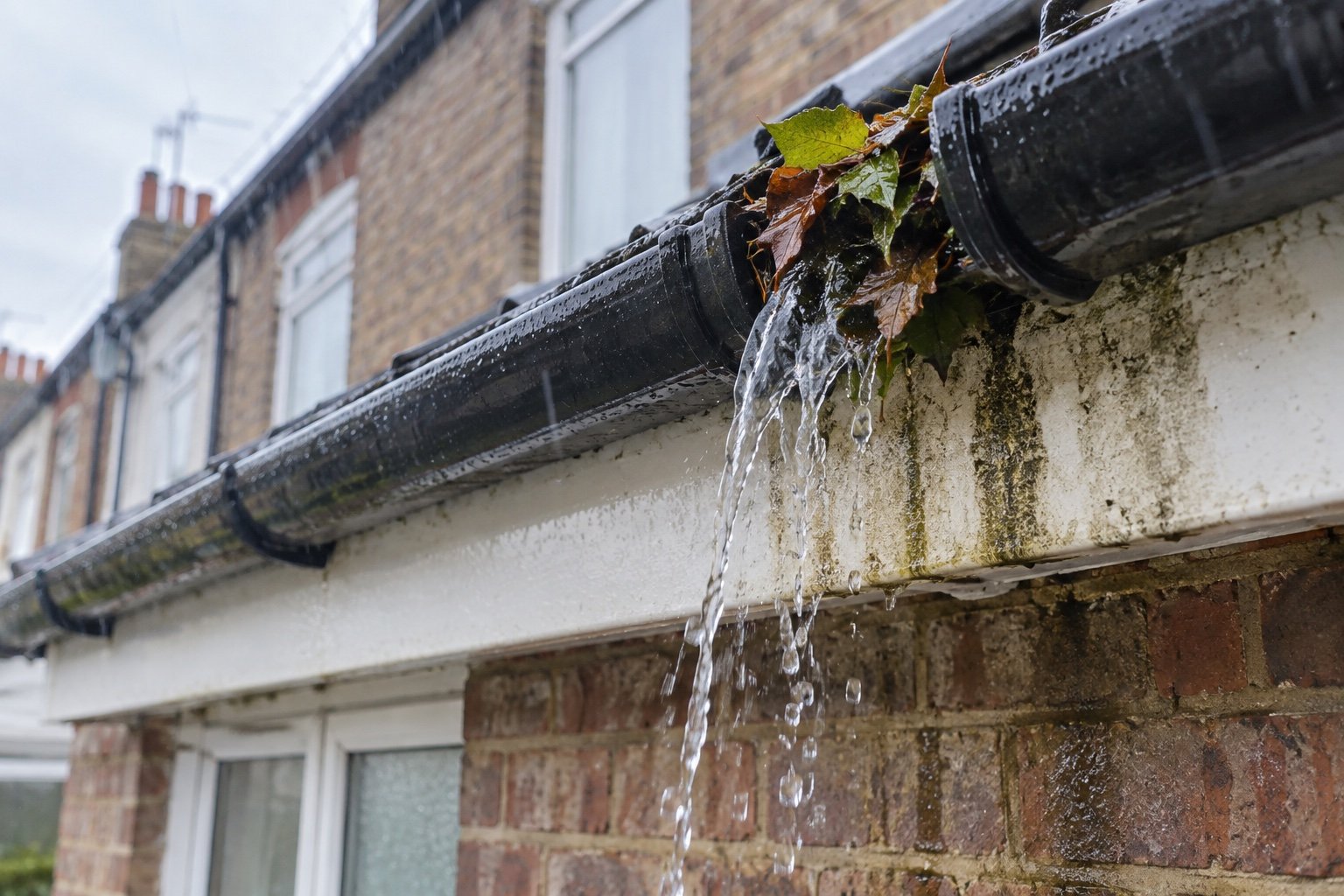
- Water pours over the front edge or behind the gutter in rain.
- A downpipe gurgles, drains slowly or releases water at the base after a delay.
- Damp patches, splash-back or saturated render appear beneath the gutter line.
- Green or brown streaking appears on the fascia, soffit or cladding.
- Moss, plants, leaves or nesting material are visible from ground level.
- The middle of a run sags or appears to hold water.
- Brackets look loose, clips have failed or fascia paint is bubbling.
One sign can have a simple cause. Two or more signs—especially overflow plus staining or a gurgling downpipe—justify a professional clearance soon. A visit should distinguish debris from a repair issue rather than assuming replacement is needed.
Gutter vacuum or ladder?
The Health and Safety Executive’s work-at-height guidance says work should be planned, supervised and carried out by competent people using suitable equipment. It recommends avoiding work at height where reasonably practicable, then preventing falls where it cannot be avoided and minimising the consequences of any remaining risk.
A camera-on-pole check can show leaf mats, silt around an outlet and whether a gutter needs more than clearance. It cannot diagnose every hidden roofline defect. If a failed bracket, cracked run or suspect fascia is found, ask for a separate repair recommendation.
What affects the cost?
There is no useful one-size-fits-all figure for this work. The agreed scope should reflect the total gutter run, height, access around the building, debris level, whether downpipes need attention, VAT and any equipment required. A compact home with clear access is different from a multi-storey terrace, a back-of-terrace property or a building with parapet drainage.
For a clear comparison, use a current gutter-cleaning cost guide with validated property-type bands. This timing article is intended to help you decide when to book and what to ask the contractor to include.
DIY or professional clearance?
From the ground, a homeowner can check for visible overflow after rain, photograph a downpipe outlet, note the affected elevation and keep surface drains free of obvious leaf build-up. High-level gutter work is different. A two-storey frontage over a pavement, a parapet or a valley gutter needs a suitable access plan.
A low single-storey rear extension may be straightforward for an experienced person using appropriate equipment in dry conditions, but reaching across a roof edge or using a gutter as a rest point can turn a small job into an injury. Gather useful observations from the ground, then let the contractor decide whether a vacuum, tower or another method is appropriate.
Do gutter guards mean I never need cleaning?
No. A guard can reduce the frequency of clearance, but it does not eliminate maintenance. Brushes can collect debris on top, mesh can allow fine grit and seeds through, and solid covers need to be matched to the roof and gutter system. Ask for a recommendation based on the profile, tree cover and maintenance needed after fitting. See the site’s gutter guards and leaf protection service for the practical options.
When clearance reveals a roofline problem
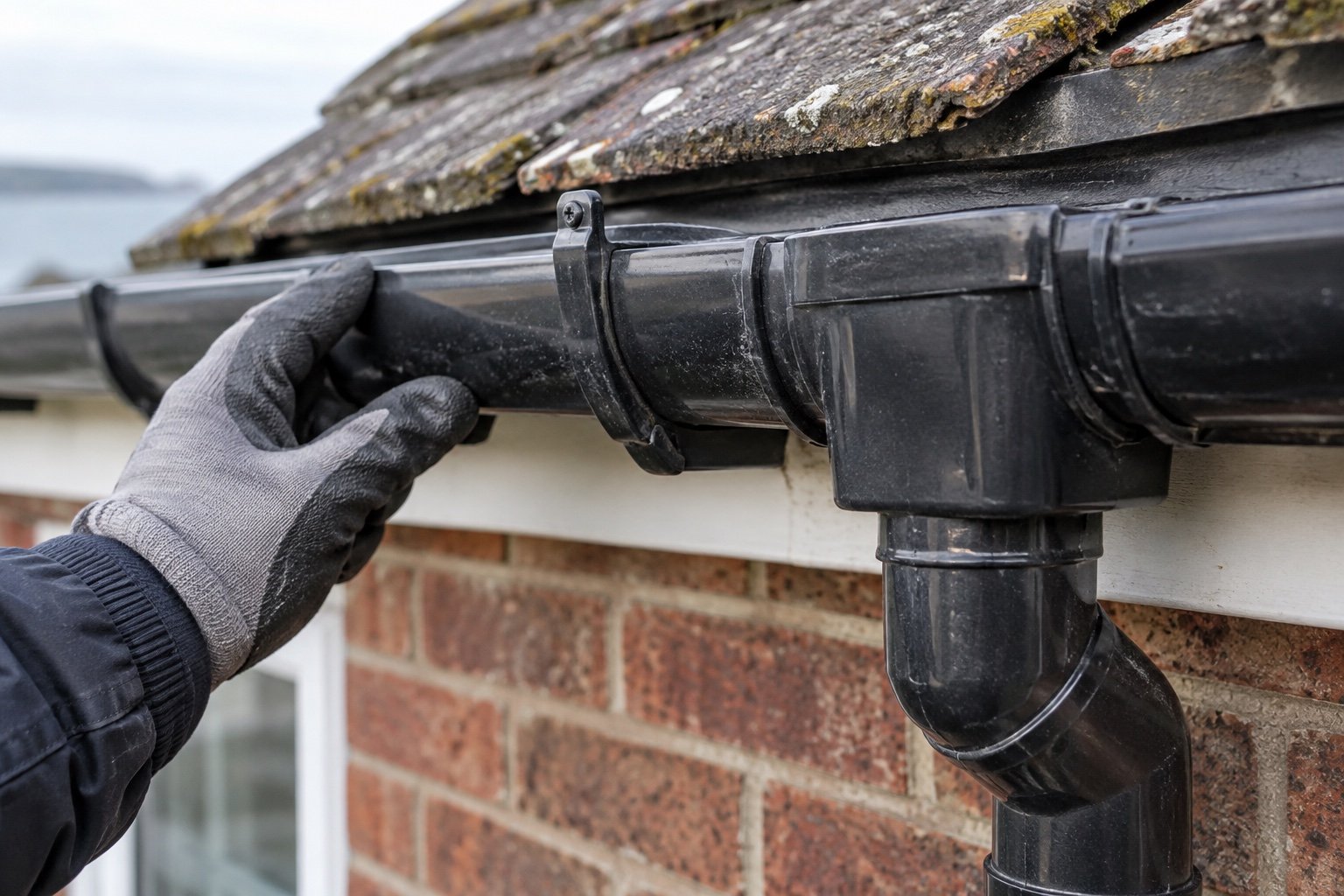
A clearance is an opportunity to see what is happening, not a hard-sell route to replacement. Salt crust, corrosion, a gutter that has lost its fall, loose brackets or a fascia that will not retain a fixing may need a separate gutter repair assessment.
Water spilling over a clean gutter may show that the profile is too small for the roof area, a valley is discharging too much water into one point or the run has lost its fall. A recurring downpipe blockage may be caused by silt collecting at the shoe rather than by a broken pipe. These are survey questions, so agree any repair or replacement with its own scope, price and access plan.
For shared terrace gutters, historic rainwater goods, dry verge or dry ridge work, check the exact planning and conservation position. Portsmouth City Council’s planning information can help confirm local considerations for a particular property.
Frequently asked questions
What is the best month to clean gutters in the UK?
October or early November is usually the most important window because it follows the main leaf fall and comes before much of the winter weather. In Portsmouth, a second spring visit in April is a sensible baseline for many homes.
How often should I clean gutters in Portsmouth?
Twice yearly suits many local homes: late October or early November and April. Heavily tree-lined streets may need a third check, while properties with little nearby canopy may manage with one planned annual clean after review.
Can I clean gutters myself?
Ground-level observation is useful. For high-level gutter work, especially a two-storey elevation, pavement-facing frontage, parapet or valley, use a competent contractor with a suitable access plan rather than attempting it from a domestic ladder.
Are ladders banned for gutter cleaning?
No. The equipment must be suitable for the task, and ladders should not be rested on plastic gutters or used as a shortcut for high-level clearance.
What happens if I wait until winter?
A winter clearance may be needed after an overflow or storm, but it is reactive work. Where conditions are suitable, clearing after autumn leaf fall reduces the risk of water being directed onto the fascia and walls during heavy rain.
Book a Portsmouth gutter clearance
If you are approaching late October, have seen an early warning sign or live on a heavily tree-lined street, request a fixed-price scope before the autumn weather arrives. Share the postcode, property type, accessible elevations and a ground-level photo of the symptom.
Request a clearance assessment