
A leaking gutter does not automatically need replacing. One dripping joint, a blocked outlet or a loose bracket may be repairable. Replacement becomes more likely when faults repeat along the same run, the gutter has lost its shape, or the board supporting it is no longer sound.
This guide explains what you can look for from the garden path, why the fascia matters as much as the gutter itself, and when it is sensible to arrange a survey. Keep both feet on the ground: do not rest a ladder against plastic guttering or attempt high-level inspection yourself.
Repair or replace: the short answer
A local repair is often appropriate when the rest of the run is straight, firmly fixed and draining properly. Examples include a single leaking joint, one cracked section with a compatible replacement available, a blocked outlet or a loose bracket fixed into sound fascia.
Replacement is more likely when several symptoms appear across one elevation: repeated leaks, sagging between brackets, sections pulling away from the house, water staining below the gutter line or fittings that will not stay secure. The visible gutter can be the symptom rather than the cause, particularly where the fascia behind it has deteriorated.
A ground-level gutter inspection
Look during or shortly after rain if you can do so safely. Take a wide photo of the elevation, a closer photo of the symptom and one showing the outlet or downpipe. These images can help a contractor decide whether the next step is clearance, a targeted repair or an on-site inspection.
Look for a low spot or a sagging run
A small dip can be one fixing problem. If a low spot continues across several brackets or holds water, the fall may be wrong or the fascia may no longer be holding the brackets securely. Treat repeated sagging as a survey item, rather than assuming that one replacement clip will solve it.
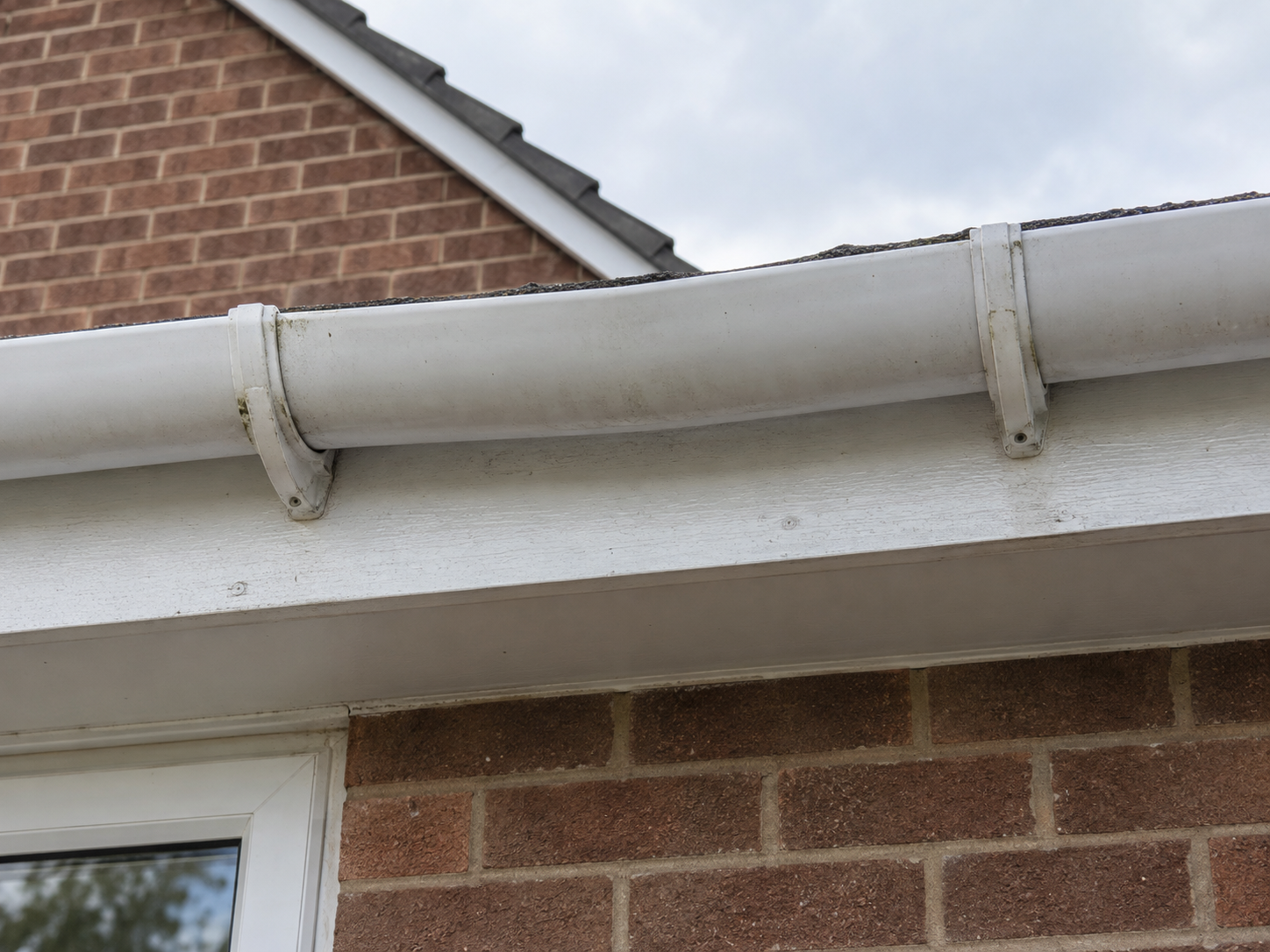
Check for leaks, cracks and water going behind the gutter
One dripping joint on an otherwise sound run may be resealed or reset. Several leaking joints can suggest movement, poor fall or an expansion issue. Water running behind the gutter can be caused by blockage, an incorrectly positioned outlet or a profile that cannot handle the roof area in heavy rain. Photograph the pattern from a safe position and arrange a survey if it happens more than once.
Notice rust, fading and brittle sections
Rust around metal joints or paint blistering can point to coating failure. One impact crack in uPVC may be a local replacement, but several brittle cracks, chalking and fading on an older run are useful context when deciding whether repeated repairs are still worthwhile.
When the fascia may be the real problem
Guttering depends on the fascia board or another suitable fixing system to stay straight and retain its fall. On some homes, a uPVC cover board sits over earlier timber. If water has been running behind the gutter for years, the timber may have deteriorated out of sight. New guttering fixed into weak backing can pull away again even when the gutter itself is new.
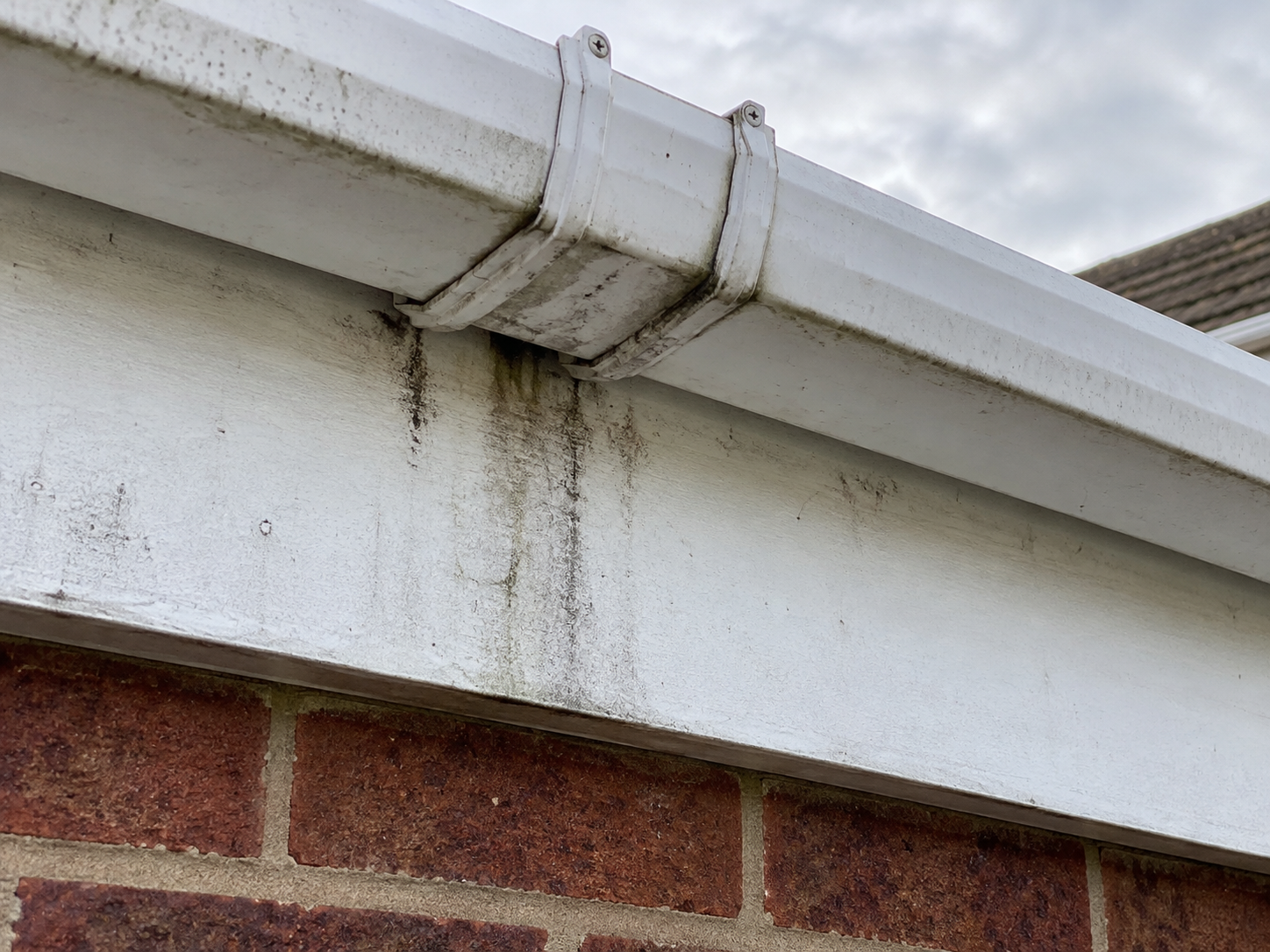
From the ground, look for a wavy or bulging fascia line, dark vertical streaks below the gutter, rusty fixing heads and brackets that have started to pull back. These signs do not prove hidden rot, but together they justify an inspection that includes the fixing background. If the support is unsound, a fascia and soffit repair or a broader roofline replacement may be more durable than a gutter-only job.
Choosing the right replacement
There is no one gutter profile or material that suits every Portsmouth property. A correctly sized uPVC system is a practical choice for many homes, while an exposed elevation, a larger roof area, a valley discharge or a preference for fewer joints can change the specification. The important questions are the roof area, fall, outlet capacity, downpipe route, bracket spacing and the condition of the supporting roofline.
For period homes or properties where appearance matters, keep the existing roofline character in mind. If the building is listed or the work changes the appearance in a conservation area, check the current position with Portsmouth City Council before ordering materials. A survey for gutter installation should explain the proposed profile, fixings, outlets and access plan rather than simply offering a one-size-fits-all replacement.
Don’t overlook the downpipe and outlet
The gutter and downpipe need to work as one system. A clean, straight run will still overflow if the outlet is blocked, undersized or not connected to a suitable downpipe. Ask a contractor to check the complete water path from roof edge to discharge point, especially where overflow happens in heavy rain.
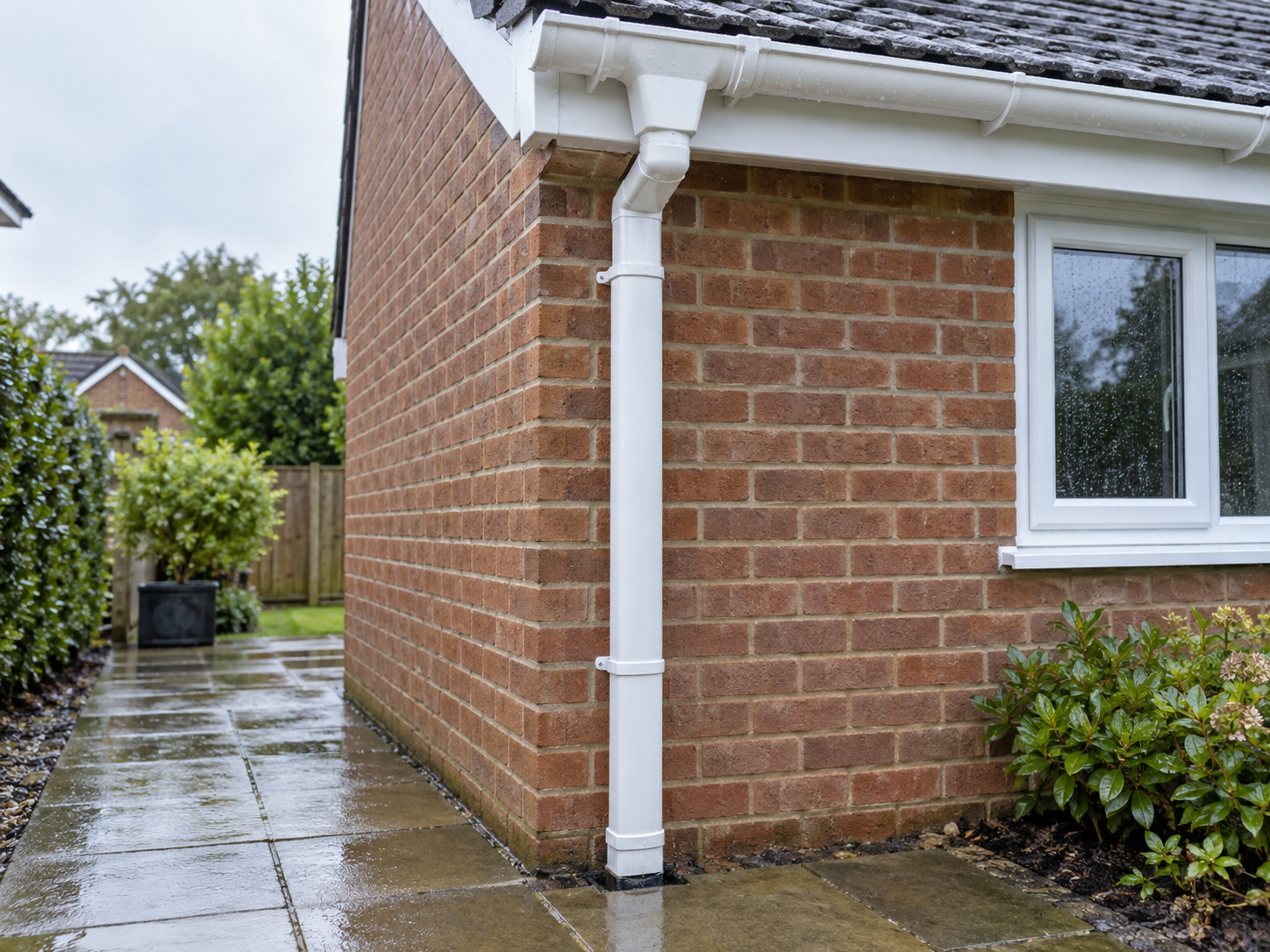
Leaves and debris can also make a sound gutter look as though it has failed. If the system is otherwise straight and securely fixed, a gutter clean may be the sensible first step. If the downpipe is split, poorly aligned or repeatedly backing up, the survey may instead recommend downpipe repair or replacement.
What a useful survey should cover
- The cause of the leak, sagging or overflow — not only the visible symptom.
- The condition of gutter sections, joints, brackets, outlets and downpipes.
- Whether the fascia and its fixings are sound enough to support the proposed work.
- The gutter profile, falls and drainage capacity appropriate to the roof area.
- Access, waste removal, warranty terms and any exclusions before work starts.
Be cautious of a recommendation that treats every leak as a full replacement, or a price that cannot explain why water is missing the gutter. A sound repair can be the right result when the surrounding system is doing its job; a replacement should solve a clearly identified underlying fault.
Frequently asked questions
Should I repair or replace my gutters?
Repair is often appropriate for one isolated leaking joint, loose bracket or cracked section on an otherwise sound run. Replacement is more likely when faults repeat across an elevation, the gutter is distorted or the fascia behind it cannot retain fixings.
How do I know whether a sagging gutter needs replacing?
A local sag can be a bracket repair if the gutter and fascia remain sound. Sagging across several brackets, standing water in the run or fixings pulling out of the board point to a wider drainage or roofline issue that needs inspection.
Can I inspect gutters myself?
You can look from the garden path and take photographs of leaks, staining, sagging and loose brackets. Do not climb onto the roof or rest a ladder against plastic gutters. High-level inspection and repair need suitable planning, equipment and competence.
Arrange a repair-or-replace survey
If you are unsure whether the answer is clearance, repair or replacement, send three ground-level photographs with your postcode: one wide view of the elevation, one of the symptom and one of the downpipe or outlet. Premier Gutter and Cladding Portsmouth serves Southsea and the wider Portsmouth area. For an urgent leak or detached section, use the emergency gutter repair service; for a planned survey, contact the team.